Retail doesn't move markets. Institutions do.. and they don't post about it. I'm Hamilton. 17 years trading, three bear markets, still standing. Every morning before the open I show you where the big money's actually moving.. what it's buying, what it's leaving, and what I'm doing about it. 3 minutes, free. The next big move, we're in it instead of reading about it.
Does a 13-Year Old Bull Market Still Have Room to Run?
In Today’s Letter
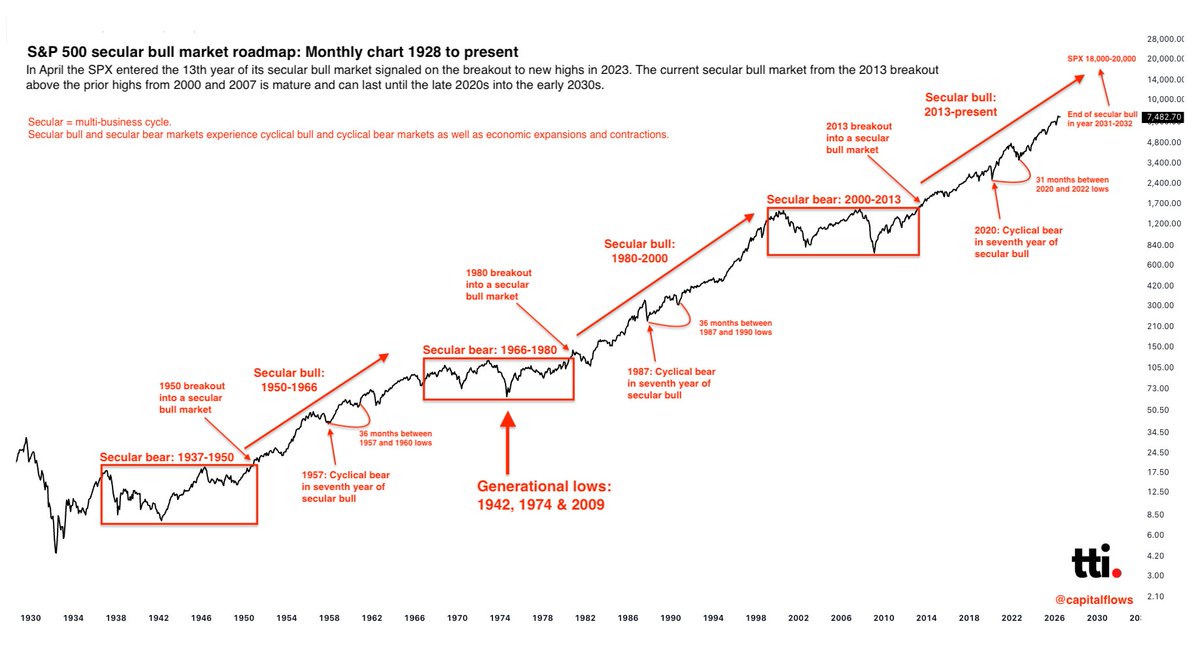
Every Sunday, I like to take a step back from the day-to-day market and think about the bigger picture. Not what might move tomorrow.. But what could shape markets for the next several quarters and years. The ideas that aren’t front and center. The questions most traders aren’t asking yet. This week, secular cycles are on my mind. Because if this bull market is already thirteen years old.. How much longer can it really last? It’s a fair question. Every time stocks pull back, someone declares that the bull market is finally over. Maybe one day they’ll be right. But traders often make one big mistake when thinking about market cycles. They confuse the weather with the season. A thunderstorm can ruin your afternoon. It can knock down trees, flood the streets, and make it feel like the sun will never come back. But a storm in July doesn’t mean summer is over. It’s weather. The season is something much bigger. Markets work the same way. Cyclical trends are the weather. They can last months or even a few years. Secular trends are the season. They can last decades. And if we confuse the two, we risk making a long-term decision because of a short-term storm. Here’s What’s InterestingThe current secular bull market didn’t begin at the COVID low. It didn’t begin after the 2022 bear market, either. It began in 2013, when the S&P 500 finally broke above the major highs from 2000 and 2007. That breakout ended thirteen years of stocks going nowhere. And it started a new season. The secular bull from 1950 to 1966 lasted sixteen years. The next one ran from 1980 to 2000 and lasted twenty. Both experienced recessions, crashes, and cyclical bear markets along the way. In 1957, stocks entered a bear market during the seventh year of the secular bull. The same thing happened in 1987. Then it happened again in 2020. Each decline felt like the end while traders were living through it. None of them ended the larger advance. The current cycle has already survived COVID and the 2022 bear market. Both storms were violent. But capital came back, prices recovered, and the S&P 500 continued making new highs. That doesn’t mean stocks can’t correct again. They will. It means a correction and the end of a secular bull market aren’t the same thing. Age alone won’t end this cycle. Neither will an alarming headline or someone predicting a crash on X for the 154th time. The season changes when capital stops returning. So far, price is telling us that hasn’t happened. As a matter of fact.. it's continuing to flood in. I went much deeper on this chart earlier this week.. including what drives secular bull markets, what eventually ends them, and where we may be today.
Let me know what you think in the comments. This Week in Profits Over ProphetsOn Friday, we asked: Why Are Banks Rallying Before Earnings? If traders are nervous about earnings, why is capital moving into Financials before the reports arrive? The market may have already cast its vote. On Saturday, we asked: Are the Magnificent Seven About to Lead Again? The group is moving higher again. Now we’re watching whether it can start beating the rest of the market. One Last ThoughtTraders spend a lot of time trying to predict the next storm. But the bigger advantage comes from knowing which season we’re in. Cyclical bears change the weather. Secular bears change the season. The S&P 500 is now in year thirteen of this secular bull. That doesn’t make the market invincible. It makes context more important than ever. Until capital votes otherwise.. I’m not going to confuse a storm with winter. Profits Over Prophets, Hamilton P.S. Do you think this secular bull market makes it to 2030? Reply YES or NO. If you enjoy thinking about markets this way, that’s exactly what we do every morning inside The Trading Initiative. |

The Trading Initiative
Retail doesn't move markets. Institutions do.. and they don't post about it. I'm Hamilton. 17 years trading, three bear markets, still standing. Every morning before the open I show you where the big money's actually moving.. what it's buying, what it's leaving, and what I'm doing about it. 3 minutes, free. The next big move, we're in it instead of reading about it.
In Today’s Letter The Magnificent Seven are moving higher again. But they’ve trailed the S&P 500 since November. This week may be the first sign that leadership is changing. If the Magnificent Seven are so strong.. Why have they been losing to the rest of the market? That question might sound strange. After all, the Magnificent Seven have been moving higher for years. They’re some of the largest and most profitable companies in the world. And this week, they rallied nearly 4%. But going up...
In Today's Letter Bank earnings begin next week. Financial stocks are already making new all-time highs. The market may be telling us what to expect. Next week, the biggest banks in America report earnings. JPMorgan. Bank of America. Goldman Sachs. Wells Fargo. By next Friday afternoon, every financial news outlet will tell you who beat estimates and who didn't. But here's the question I can't stop thinking about.. If traders were truly worried about bank earnings.. why are they buying bank...
You just did something most traders never do.. commit to figuring out how this all actually works. So before tomorrow's email shows up, let me show you how I have survived three bear markets.. and made a couple bucks along the way. The lesson that took me 17 years I've been trading since 2009. The expensive lessons didn't come from losing trades. They came from the biggest winners in the cycle that I watched from the sidelines. Every one of those moves followed the same sequence. Institutions...